
Water is a very important resource for human life.
In Indonesia, the water refill business has become very popular as a solution for providing drinking water that is affordable and easily accessible to the public. However, behind its ease and convenience, many aspects need attention to ensure the quality and safety of the water provided. This article will discuss the water refill business in depth, including the challenges faced, the technology used, and best practices for ensuring high-quality water.
The water refill business in Indonesia has grown rapidly in recent years. Many entrepreneurs are interested in entering this business because demand is high and it is relatively easy to start. However, like other businesses related to public health, there is a major responsibility that water refill business operators must bear.
The water sources used by water refill depots vary. Some claim to use mountain water, although this claim cannot always be verified. Meanwhile, many also use PDAM water or well water as their main source. Regardless of the source, the challenges faced by water refill depots are essentially the same as those faced by household water treatment systems, but on a larger scale and with heavier responsibility.
One of the most important aspects of the water refill business is ensuring that the water produced is safe for consumption. This means that the water treatment process must be able to remove various contaminants, from pathogenic microorganisms to harmful dissolved substances. This process involves several treatment stages, each with a specific function in improving water quality.
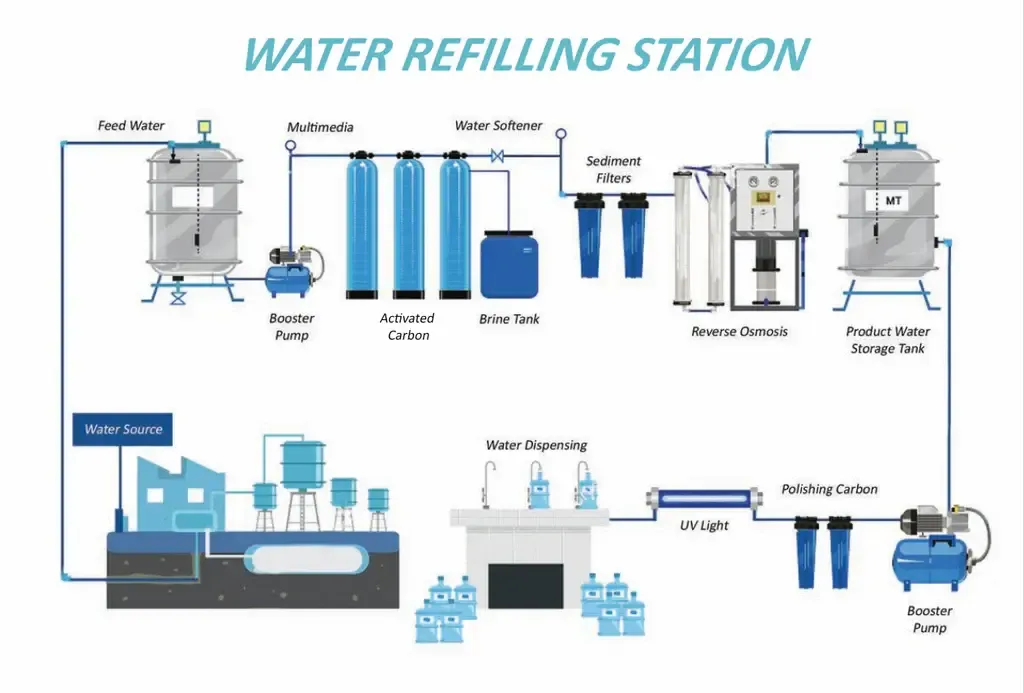
Water Treatment Stages in the Water Refill Business
Source: https://innovativewatersolutionsinc.com/
The water treatment process in the water refill business usually consists of several main stages:
- Raw Water Storage: Water from the source (PDAM, well, or other sources) is first stored in a storage tank. This stage is important for ensuring a stable water supply and allowing time for initial settling.
- Initial Filtration: The water then passes through a series of filters to remove large particles. These filters can be sand filters, anthracite filters, or multimedia filters.
- Advanced Filtration: After initial filtration, the water passes through finer filters, such as activated carbon filters. Activated carbon filters are very effective at removing odor, taste, and dissolved organic substances.
- Reverse Osmosis (RO): Many water refill depots use RO systems to remove dissolved substances that ordinary filters cannot remove. RO systems use a semi-permeable membrane to separate pure water from contaminants.
- Disinfection: The final stage usually involves a disinfection process to ensure that no microorganisms survive. This can be done using UV light or ozonation.
Every stage in this process has an important role in ensuring the quality of the water produced. However, the effectiveness of each stage depends heavily on selecting the right equipment and consistent maintenance.
Challenges in the Water Refill Business
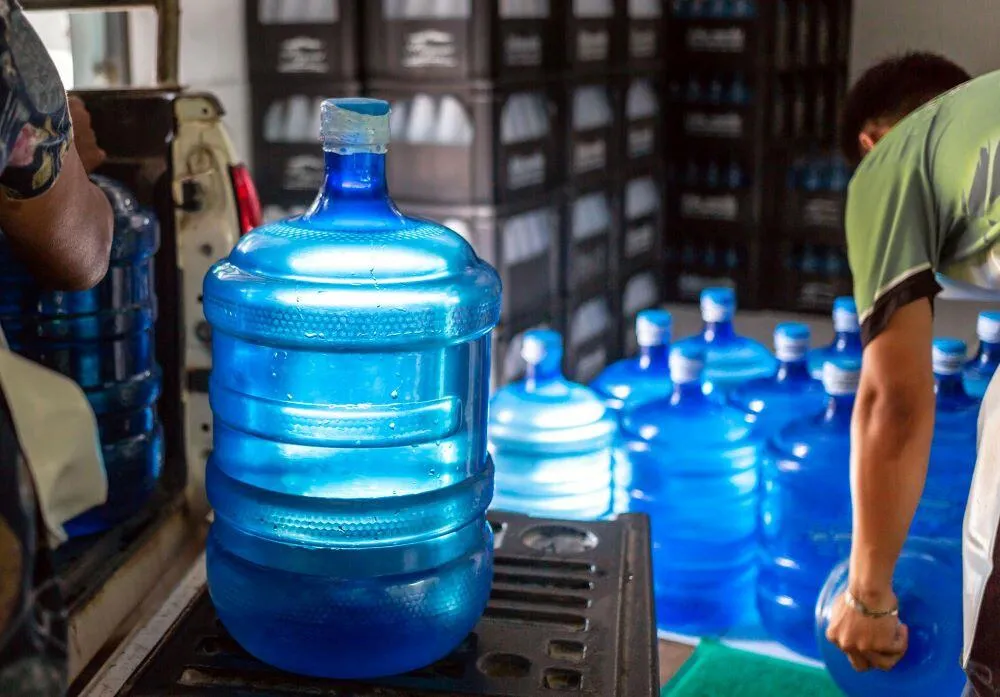
Although the water refill business offers promising opportunities, there are several significant challenges that business operators must face:
- Water Source Quality: Raw water quality varies greatly depending on location and source. PDAM water in some areas may already be clean enough, while in other areas it may contain many contaminants. Well water quality can also vary greatly.
- Equipment Investment: An effective water treatment system requires a fairly large investment. Equipment such as RO membranes, UV systems, and high-quality filters requires substantial capital.
- Maintenance and Operations: Routine maintenance and replacement of components such as filters and RO membranes are necessary to maintain water quality. This requires ongoing operational costs.
- Regulation and Supervision: Water refill businesses must comply with various health and environmental regulations. Strict supervision from the authorities requires consistent compliance.
- Competition: With many water refill depots, competition is increasingly tight. This can put pressure on prices and potentially compromise quality if not managed well.
Meeting these challenges requires a comprehensive approach and a commitment to quality. Water refill business operators need to understand that they run a business and also carry a major public health responsibility.
Also read: How to Market a Water Refill Business to Get Customers
Key Technologies in Water Treatment
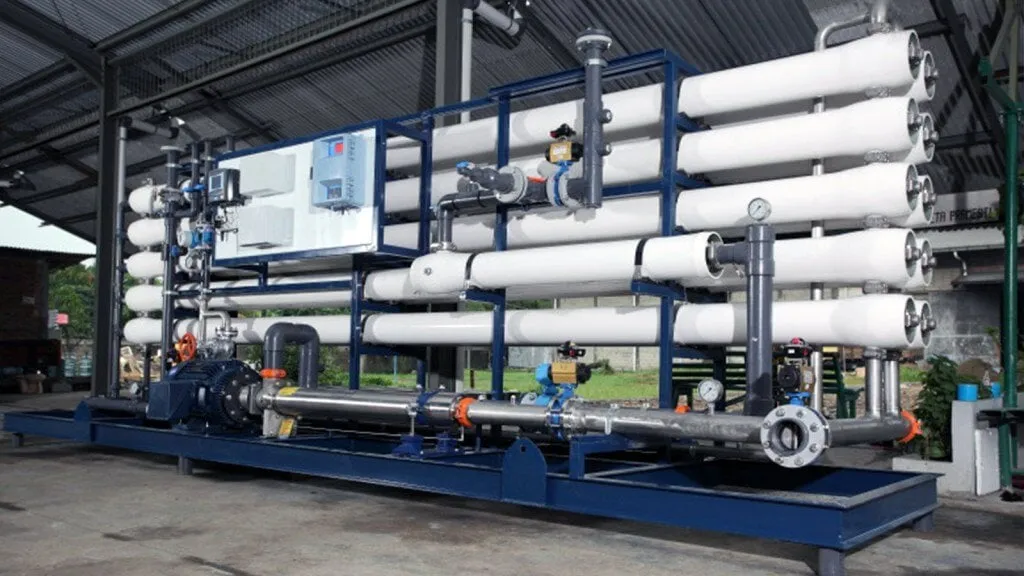
To produce high-quality water, several key technologies play an important role in the water refill business:
- Reverse Osmosis (RO): RO technology has become the standard in the water treatment industry. This system can remove almost every type of contaminant, including dissolved salts, bacteria, and viruses. RO membranes made for refill depots are available in various capacities to meet different needs.
- Ultrafiltration (UF): UF technology uses membranes with larger pores than RO but can still remove most bacteria and suspended particles. UF membranes are often used as pre-treatment before RO or as an RO alternative for relatively clean water.
- UV Disinfection: Ultraviolet light is effective at inactivating microorganisms without adding chemicals to the water. UV systems are easy to operate and need little maintenance.
- Ozonation: Ozone is a strong disinfectant that can also remove odour and taste. The advantage of ozone is its residual effect, which helps keep the distribution system clean.
- Multi-media Filtration: A combination of different filter media such as sand, anthracite, and garnet can be very effective at removing various types of contaminants.
Choosing the right technology depends on several factors, including the quality of the source water, the production capacity you want, and the budget available. Often, a combination of several of these technologies is used to achieve optimal results.
Best Practices in the Water Refill Business
To ensure the success and sustainability of a water refill business, there are several best practices to keep in mind:
- Choosing the Right Water Source: Ideally, use a water source that is consistent and whose quality can be relied on. If you use well water, test it periodically to monitor its quality.
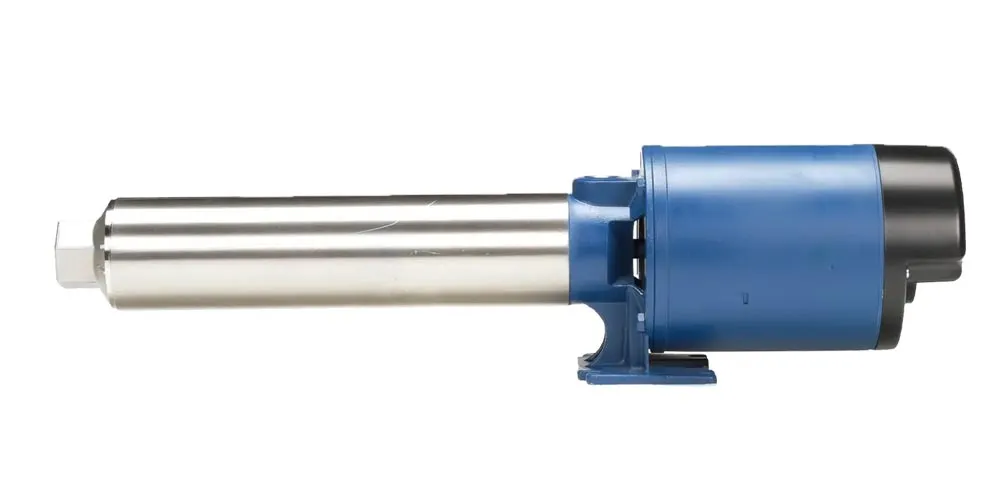
- Investing in Quality Equipment: Although it may cost more up front, high-quality equipment will give better results and last longer. This includes FRP filter tanks, energy-efficient RO pumps, and automatic control systems.
- Routine Maintenance: Schedule and carry out routine maintenance on all equipment. This includes replacing filters, cleaning RO membranes, and calibrating measuring instruments.
- Water Quality Testing: Test water quality regularly, both in-house and through an accredited laboratory. This is important for ensuring consistent quality and compliance with the standards in force.
- Employee Training: Make sure all employees understand the basic principles of water treatment and good hygiene practices. Regular training can help maintain high operational standards.
- Transparency with Customers: Be open about the water treatment process and the results of quality testing. This can build customer trust and set your business apart from competitors.
- Continuous Innovation: Keep up with developments in water treatment technology. Innovations such as real-time monitoring systems or new filtration technologies can improve efficiency and product quality.
By applying these best practices, a water refill business can meet regulatory standards, exceed customer expectations and build a strong reputation in the market.
The Important Role of Disinfection in a Water Refill Business
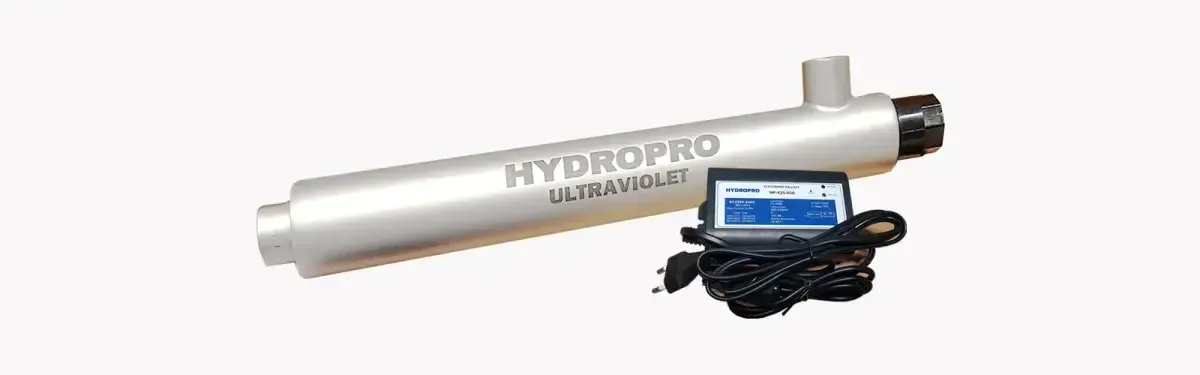
Disinfection is a critical stage in water treatment, especially for water refill businesses that serve the general public. The main purpose of disinfection is to ensure that the water produced is free of pathogenic microorganisms that can cause disease. Several disinfection methods are commonly used in this industry:
- Ultraviolet (UV) Disinfection: UV light is very effective at inactivating bacteria, viruses and protozoa. A UV system is relatively easy to operate and adds no chemicals to the water. However, its effectiveness depends on water clarity, so good pre-treatment is essential.
- Ozonation: Ozone is a very strong disinfectant and is effective against many types of microorganisms. It can also remove unwanted odor and taste. An added advantage of ozonation is its residual effect, which can help keep the distribution system clean.
- Chlorination: Although it is rarely used in water refill depots because of the taste and odor it can leave, chlorine remains an effective and economical disinfection method for large-scale water treatment systems.
Choosing the right disinfection method depends on several factors, including source water quality, production capacity and consumer preference. Many water refill depots choose a combination of UV and ozonation to ensure thorough disinfection without adding taste or odor to the water.
The Importance of Control and Monitoring Systems
In a water refill business, consistent quality is key. Effective control and monitoring systems are essential to achieve this. Several aspects need attention:
- Automatic Control Systems: The use of automatic filter valves and computerized control systems can help ensure consistent and efficient operation.
- Real-time Monitoring: Online sensors and meters for parameters such as TDS (Total Dissolved Solids), pH and conductivity can provide instant information about system performance.
- Logging and Reporting: A system that can record and report operational data automatically helps with long-term monitoring and compliance with regulations.
- Alarms and Notifications: A system that can give an early warning when a parameter goes outside the set limit is essential for preventing water quality problems.
Investing in advanced control and monitoring systems may look expensive at the start, but it can deliver significant savings over the long term through better operational efficiency and the prevention of quality problems.
Economic Challenges and Cost-Saving Solutions
One of the main challenges in a water refill business is balancing product quality against operating costs. Several strategies for optimizing costs while maintaining quality include:
- Energy Efficiency: Using energy-efficient RO pumps and optimizing the process can significantly reduce electricity costs.
- Reject Water Management: Reject water from the RO process can be reused for non-consumption purposes or treated further to increase the recovery rate.
- Choosing the Right Filtration Media: Using high-quality filtration media such as Birm iron removal media can reduce replacement frequency and improve efficiency.
- Cleaning Process Optimization: An optimal membrane cleaning schedule can extend membrane life and reduce downtime.
By applying these strategies, water refill businesses can improve their operational efficiency without compromising product quality.
Conclusion
Water refill businesses play an important role in providing affordable, quality drinking water for the people of Indonesia. But this large responsibility comes with significant challenges as well. Operators must understand the complexity of the water treatment process, from choosing the right water source to applying advanced technologies such as reverse osmosis and UV disinfection.
The key to success in this industry lies in a commitment to quality, investment in the right technology, and the application of best practices in day-to-day operations. Choosing high-quality equipment, such as world-class pressure vessels and NSF-certified cartridge filters, is an important step in ensuring consistent product quality.
A deep understanding of the applicable regulations and the ability to adapt to the latest technological developments are also important. Operators who can balance quality, efficiency and innovation will have a significant competitive advantage in this increasingly tight market.
A water refill business supplies drinking water. It also builds public trust and contributes to public health. With a holistic approach and a commitment to quality, these businesses can continue to grow and play an important role in providing access to safe, affordable drinking water for people in Indonesia.
Questions and Answers About the Water Refill Business
1. Is water from a refill depot safe to consume directly?
Answer: If a water refill depot applies the right treatment standards and complies with the applicable regulations, the water it produces should be safe to consume directly. However, consumers are advised to choose a depot that holds official certification and tests water quality regularly. It is also important to pay attention to the cleanliness of the container used to carry the water.
2. How do I choose a quality water refill depot?
Answer: Several things to consider when choosing a good-quality water refill depot include: - Having a business license and certification from the local health office. - Using modern, well-maintained water treatment equipment. - Being willing to show the latest laboratory test results for their water quality. - Having clean and hygienic facilities. - Applying transparent water treatment procedures that can be explained to customers.
3. What is the main difference between refill water and branded bottled water?
Answer: The main difference between refill water and branded bottled water lies in the production and distribution process. Branded bottled water is usually produced on a large scale in centralized facilities with very strict quality control. It also undergoes more extensive testing and certification. Refill water, meanwhile, is produced on a smaller scale at local depots. Although many refill depots apply good quality standards, their level of consistency and control may vary. In terms of price, refill water is generally much more economical than branded bottled water.
References
-
Hendricks, David W. “Fundamentals of Water Treatment Unit Processes: Physical, Chemical, and Biological.” Page 587. “Reverse osmosis, Ultra-filtration, Nano-filtration, Micro-filtration, Diatomite-filtration”
-
Byrne, Wes. “Reverse Osmosis: A Practical Guide for Industrial Users.” Page 54. “The chapter provides a detailed overview of the operating and capital equipment costs associated with reverse osmosis (RO) systems. It discusses how the capital cost of an RO system is dependent on the size of the system, with larger systems tending to have a more linear proportion to permeate flow.”
-
Pincus, Leo I. “Practical Boiler Water Treatment including Air-Conditioning Systems.” Page 11. “Practical Boiler Water Treatment”
-
Spellman, Frank R. “Handbook of Water and Wastewater Treatment Plant Operations.” Page 2. “Water treatment plants, Sewage disposal plants, Water-Purification, Sewage-Purification”
-
Spellman, Frank R. “Handbook of Water and Wastewater Treatment Plant Operations.” Page 602. “Potable water, source, quality, natural processes, physical, chemical, biological treatment, contamination, drainage basin, runoff, groundwater recharge, drawdown, pumping level, aquifer, water table, water rights, water table, water cycle, precipitation, surface runoff, infiltration, evapotranspiration, streams, lakes, oceans, water vapor, atmosphere, moisture, clouds, rain”