
Clean water is a very important basic need for every household.
However, the available water quality does not always meet the desired standards. Therefore, household water treatment systems are an increasingly popular solution for ensuring a clean and safe water supply at home. In this article, we will discuss in depth the design principles of household water treatment systems, as well as the calculations needed to determine the right size and flow rate.
Introduction
Household water treatment systems are designed to address various common water quality problems, such as bacterial contamination, turbidity, unwanted taste and odor, and excess mineral content. These systems usually consist of several main components, including storage tanks, pumps, filters, softeners, and sometimes reverse osmosis (RO) units.
Water sources for household treatment systems generally come from two main sources: well water or PDAM water (Perusahaan Daerah Air Minum). Each of these sources has its own challenges that need to be addressed. Well water, for example, often contains high levels of iron and manganese and may be potentially contaminated by bacteria due to leaks from septic tanks. On the other hand, PDAM water that comes from rivers may be contaminated by household and industrial waste, so it requires additional treatment.
When designing a household water treatment system, it is important to consider several key factors, such as source water quality, daily water demand, space available for installation, and budget. An effective system must be able to produce clean water that is safe for consumption and for other household uses, while still considering energy efficiency and long-term operating costs.
The use of whole house, or point of entry (POE), systems for household water treatment is growing. These systems are installed where water enters the house, so every outlet receives treated water. They provide clean water throughout the house for uses from drinking water to bathing and washing.
However, keep in mind that there is no one-size-fits-all solution in household water treatment. Every home has unique needs and challenges that need to be considered. Therefore, a thorough understanding of design principles and correct calculations is very important for creating an effective and efficient system.
Design Principles of Household Water Treatment Systems
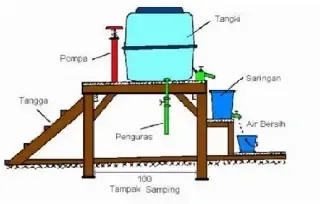
source: https://environmentalsanitation.wordpress.com/
In designing an effective household water treatment system, there are several key principles to consider:
1. Source Water Quality Analysis
The first and most important step in designing a water treatment system is to carry out a thorough analysis of the source water quality. This involves testing various parameters such as pH, hardness, iron and manganese content, total dissolved solids (TDS), and the presence of bacteria and other contaminants. The results of this analysis will determine the type of treatment required.
For well water, particular attention needs to be paid to iron and manganese levels, which are often high. In addition, potential bacterial contamination from septic tank leaks also needs to be considered. Meanwhile, for PDAM water, the treatment focus may be more on removing excess chlorine, improving taste and odor, and filtering microplastics.
2. Selecting System Components
Based on the water analysis results, the system components can be selected. A comprehensive household water treatment system usually consists of:
- Raw water storage tank
- Distribution pump
- Sediment filter to remove coarse particles
- Activated carbon filter to remove chlorine, odor, and unpleasant taste
- Softener to reduce water hardness
- Disinfection system (UV or chlorination) to kill bacteria
- Reverse Osmosis (RO) for further treatment (optional)
- Clean water storage tank
- Final distribution pump
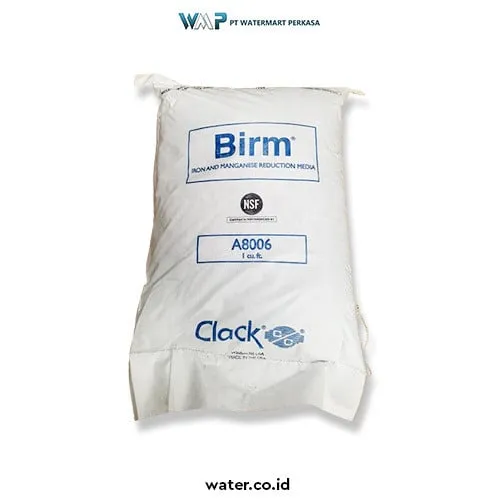
Component selection must be adapted to the specific needs of the household. For example, if the source water has high iron content, adding a special filter such as Birm media or manganese greensand may be necessary.
3. System Sizing and Capacity
Determining the size and capacity of the system is a critical aspect of the design. The system must be able to meet the household’s peak water demand, but not be so large that it becomes inefficient. Factors to consider include:
- Number of household occupants
- Estimated daily water use
- Water use patterns (for example, peak use in the morning and evening)
- Desired storage capacity
Accurate calculations will ensure the system can meet demand without overdesign that can increase costs and reduce efficiency.
4. Energy Efficiency
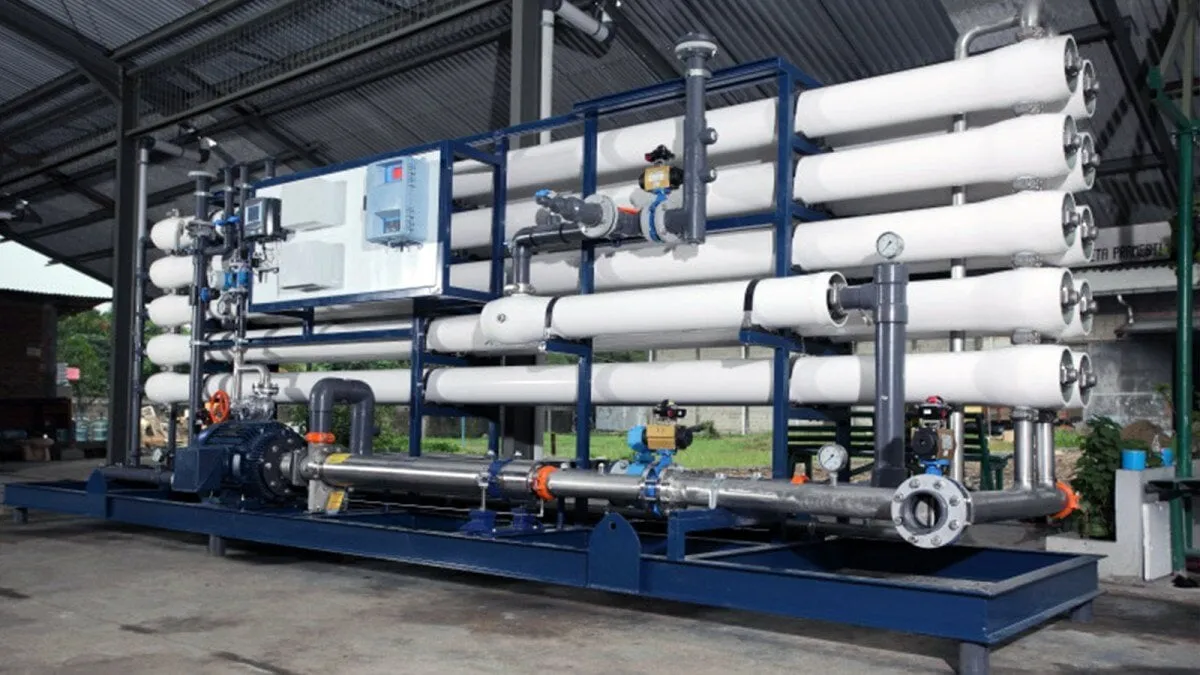
Since a water treatment system will operate continuously, energy efficiency is an important consideration. Choosing an efficient pump, such as an energy-efficient RO pump, can help reduce long-term operating costs. In addition, using a pressure tank such as Wellmate pressure tanks can help reduce the frequency of pump start-stop cycles, thereby saving energy and extending pump life.
5. Ease of Maintenance

A well-designed system must be easy to maintain. This involves selecting components that are easy to access for cleaning or replacement, such as the Pentair Pentek cartridge filter, which is easy to replace. In addition, simple monitoring devices such as pressure gauges and flow meters can help homeowners monitor system performance and know when maintenance is needed.
6. Flexibility and Scalability
Household water needs can change over time. Therefore, a system that is designed should preferably have the flexibility to be adjusted or upgraded in the future. For example, by providing extra space for adding components such as an RO or UV unit later on.
7. Safety and Regulatory Compliance
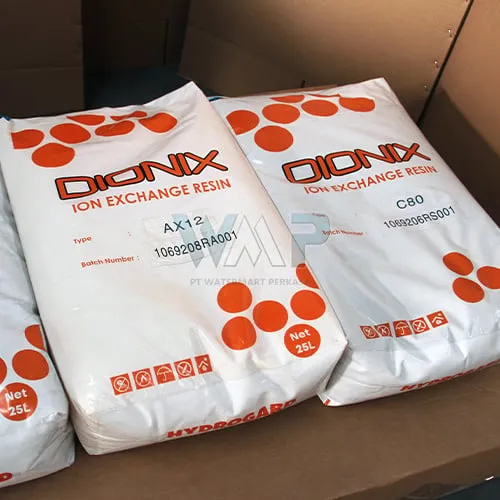
Water treatment systems must meet safety standards and local regulations. This includes the use of certified components, such as MUI halal-certified ion exchange resin for softeners, and ensuring that the quality of the treated water meets the drinking water standards set by the government.
Calculating System Size and Flow Rate
After understanding the design principles, the next step is to perform calculations to determine the right system size and flow rate. The following are several key calculations that need to be done:
1. Estimating Daily Water Demand
The first step is to calculate the total daily water demand of the household. The basic formula is:
Total Water Demand = Number of Occupants x Average Water Use per Person per Day
For example, for a house with 4 occupants and an average use of 200 liters per person per day:
Total Water Demand = 4 x 200 = 800 liters per day
2. Determining Peak Flow Rate
Peak flow rate usually occurs in the morning or evening when many water fixtures are used at the same time. As a rough estimate, the peak flow rate can be assumed to be around 2-3 times the average daily flow rate.
Peak Flow Rate = (Total Water Demand / 24 hours) x Peak Factor
Using the previous example and a peak factor of 2.5:
Peak Flow Rate = (800 / 24) x 2.5 = 83.33 liters per hour or about 1.4 liters per minute
3. Sizing the Storage Tank
The storage tank size must be large enough to meet water demand during peak periods and provide a reserve for emergency situations. Generally, a tank capacity of around 1-2 days of water demand is considered adequate.
Tank Capacity = Total Daily Water Demand x Reserve Factor
With a reserve factor of 1.5:
Tank Capacity = 800 x 1.5 = 1200 liters
4. Sizing the Pump
The pump must be able to meet the peak flow rate with sufficient pressure. Pump capacity is usually expressed in GPM (Gallon Per Minute) or LPM (Liter Per Minute).
Pump Capacity ≥ Peak Flow Rate
In this example, the pump must have a capacity of at least 1.4 LPM. In practice, however, choosing a pump with a slightly higher capacity (for example 2-3 LPM) will provide a safety margin.
5. Sizing the Filter
Filter size is determined by the flow rate and the treatment capacity required. For example, for a sediment filter:
Filter Surface Area = Flow Rate / Specific Filtration Rate
If the specific filtration rate is 20 LPM/m², then:
Filter Surface Area = 1.4 / 20 = 0.07 m²
Based on this result, a filter with a diameter of around 30 cm may already be adequate.
6. Sizing the Softener
Softener size is determined by water hardness and the volume of water that needs to be treated between regenerations. The general formula is:
Softener Capacity (grains) = Water Hardness (gpg) x Daily Water Volume (gallons) x Days Between Regeneration
For example, if the water hardness is 10 gpg, the daily water volume is 211 gallons (800 liters), and regeneration is done every 7 days:
Softener Capacity = 10 x 211 x 7 = 14,770 grains
Based on this result, a softener with a capacity of 15,000 grains or more will be suitable.
7. Sizing Reverse Osmosis (if needed)
If an RO system is used, its size is determined by the daily drinking water requirement. Generally, an RO capacity of about 10-20% of the total water requirement is considered sufficient for drinking and cooking needs.
RO Capacity = 15% x Total Daily Water Requirement
In this example: RO Capacity = 15% x 800 = 120 liters per day
A household RO system with a capacity of 50-100 GPD (Gallon Per Day) or about 190-380 liters per day is generally sufficient for this need.
System Implementation and Optimization
After the calculations and component selection, the next step is implementing the system. A few things to pay attention to at this stage:
1. Layout and Installation
Good layout planning is very important to ensure system efficiency and ease of maintenance. The main components such as storage tanks, pumps, and filters should be placed in an easily accessible area. Using FRP Polyglass filter tanks from Pentair can help save space because of their compact design.
2. Control and Monitoring System
Implementing an automatic control system can improve operational efficiency. For example, using Pentair Autotrol automatic filter valves can automate the backwash and regeneration process. In addition, installing flow meters and pressure gauges at critical points in the system will make performance monitoring easier.
3. Disinfection
The disinfection step is very important to ensure the microbiological safety of the water. This can be done through chlorination or the use of a UV system. The Hydropro UV system is an effective and environmentally friendly option for household water disinfection.
4. Adjustment and Optimization
After the system is installed, a period of adjustment and optimization is needed. This involves fine-tuning various parameters such as operating pressure, flow rate, and chemical dosage (if any) to achieve optimal performance. Using a pH meter and a conductivity analyzer from Create can help in this optimization process. For conductivity and TDS, the ROC CCT-3320T conductivity and TDS monitor is one documented example in our catalogue.
5. Routine Maintenance
Drawing up a routine maintenance schedule is very important to ensure the long-term performance of the system. This includes replacing filters, cleaning tanks, and checking critical components such as pumps and valves. Using MUI halal-certified melt-blown cartridges from Hydropro can make the periodic filter replacement process easier.
Conclusion
Designing an effective household water treatment system requires a thorough understanding of the basic principles and accurate calculations. By considering factors such as source water quality, daily water demand, and selection of the right components, we can create a system that produces clean, safe water and is also efficient and easy to maintain.
Keep in mind that every home has unique needs, and there is no one-size-fits-all solution in household water treatment. Therefore, consultation with a water treatment expert and careful consideration of the home’s specific conditions are highly recommended before starting a water treatment system installation project.
With the right approach, a household water treatment system can be a valuable long-term investment, providing safety and convenience in the supply of clean water for the whole family. In addition, by choosing high-quality components and performing routine maintenance, the system can operate efficiently for years, providing significant health and economic benefits.
Questions and Answers
1. Can a household water treatment system address well water with high iron content?
Yes, a household water treatment system can be designed specifically to address high iron content in well water. Common solutions involve the use of special filters such as Birm media or manganese greensand. This process, known as iron removal, is very effective in reducing iron levels to safe, acceptable levels. In addition, combining it with aeration and multi-stage filtration can improve iron removal effectiveness. It is important to analyze the water first to determine the iron content and design the right system.
2. How do you determine whether a Reverse Osmosis (RO) system is needed in a household water treatment system?
Whether to include a Reverse Osmosis (RO) system in household water treatment depends on several factors: 1. Source water quality: RO may be needed if the water contains high levels of Total Dissolved Solids (TDS), contaminants such as nitrate, or heavy metals. 2. Purpose of use: If the water is used for drinking or cooking, RO can provide a higher level of purification. 3. Local regulations: Some areas may have water quality standards that require the use of RO. 4. Occupant preference: Some people may want a very high level of water purification for health or taste reasons. A comprehensive water quality analysis and consultation with a water treatment expert can help in making this decision.
3. How often does a household water treatment system need maintenance, and what does routine maintenance include?
Maintenance frequency for household water treatment systems varies depending on source water quality and system complexity, but generally includes: 1. Sediment filter replacement: Every 3-6 months, depending on the water turbidity level. 2. Activated carbon filter replacement: Every 6-12 months. 3. Softener regeneration: Depending on water hardness and use, usually every 1-2 weeks. 4. Storage tank cleaning: At least once a year. 5. UV system inspection and cleaning (if present): Every 6-12 months. 6. RO membrane replacement (if present): Every 2-3 years. 7. Pump and valve inspection: Every 6 months. Routine maintenance also includes monitoring system pressure, flow rate, and output water quality. It is important to follow the manufacturer’s recommendations for each specific component in your system.
References
- Byrne, W. (2002). Reverse osmosis: A practical guide for industrial users. Tall Oaks Publishing. (p. 46) “This summary provides a comprehensive overview of the reverse osmosis (RO) treatment process based on the information presented in the first page of the provided image. It covers key aspects such as:Determining the best staging for the RO application: The text describes a process for determining the optimal allocation of housings (or elements) through the various stages of the RO system.” 2. Hussain, A., & Bhattacharya, A. (2019). Advanced Design of Wastewater Treatment Plants: Emerging Research and Opportunities. IGI Global. (p. 206) “The provided image contains a detailed discussion of wastewater treatment operations, including the following key points:1. The total volume of the wastewater treatment plant is given as 6666.66 m^3, calculated using the formula A = 6666.66 m^3 / 4 m = 1666.66 m^3.” 3. Byrne, W. (2002). Reverse osmosis: A practical guide for industrial users. Tall Oaks Publishing. (p. 171) “This section provides a comprehensive summary of key aspects related to reverse osmosis (RO) water treatment systems, including their design, performance, and operational considerations.” 4. Byrne, W. (2002). Reverse osmosis: A practical guide for industrial users. Tall Oaks Publishing. (p. 42) “This summary covers key points related to reverse osmosis (RO) systems and their operation, including:High oxidation potential: Membrane deterioration caused by low concentrations of oxidizers is a major concern for PA RO systems.” 5. Byrne, W. (2002). Reverse osmosis: A practical guide for industrial users. Tall Oaks Publishing. (p. 91) “The operation of a reverse osmosis system is dependent on a number of ancillary unit operations and treatment methods. This chapter discusses various treatment equipment operations and their design requirements for an efficient operation of the RO unit.”